SMART Goal Training
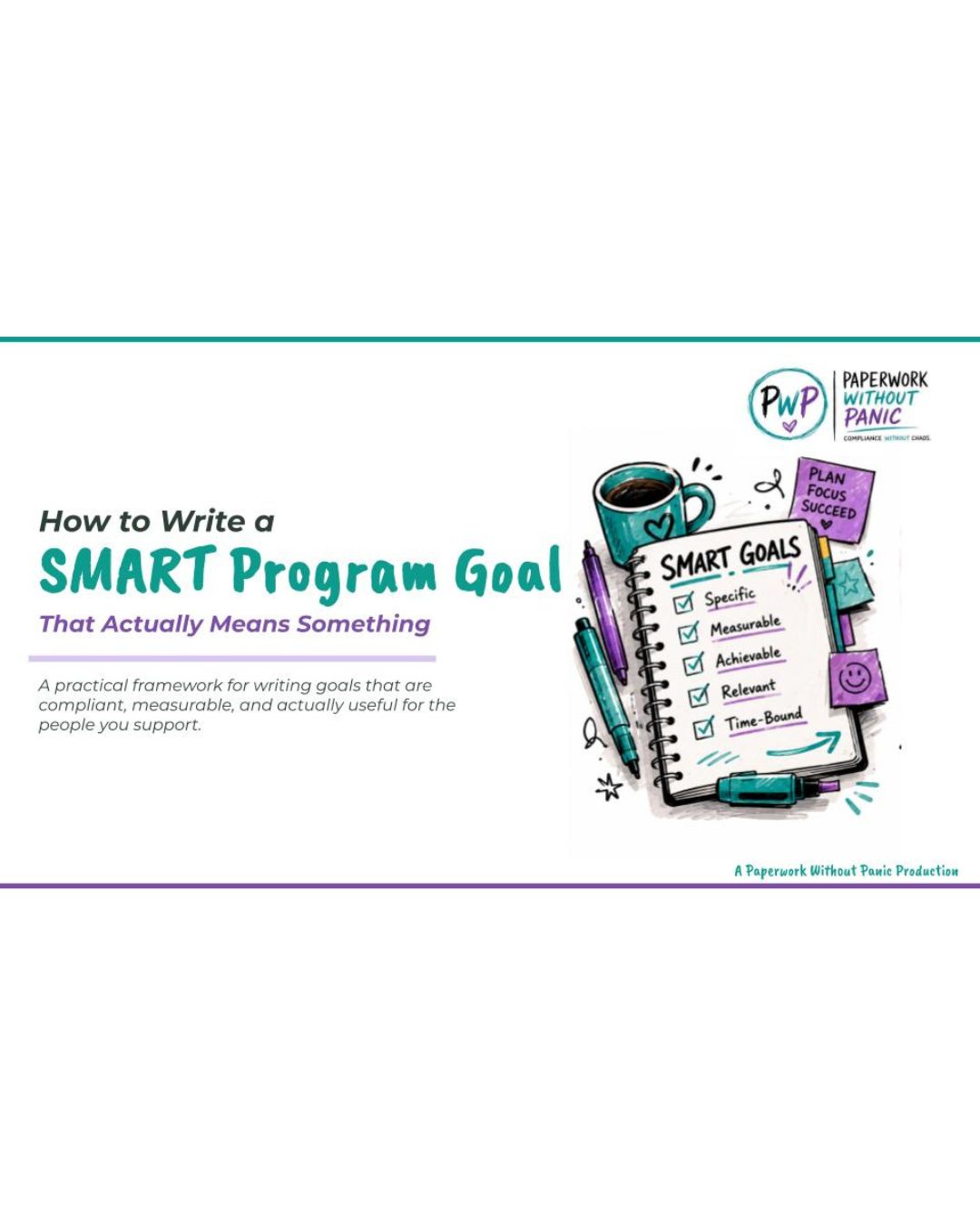
How to Write a SMART Program Goal That Actually Means Something
$29.99
SMART Program Goals: How to Write Goals That Actually Mean Something
"[Name] will improve social skills" isn't a goal — it's a placeholder. It doesn't tell staff what to track, doesn't tell a reviewer anything's individualized, and doesn't tell the person you support what they're actually working toward.
This training breaks down what SMART really means when you stop treating it as a compliance acronym and start using it as an actual quality check. You'll learn the four parts every SMART goal needs, how to tell a vague goal from one that holds up under review, and the five mistakes — copy-paste goals, "ongoing" as a timeline, no prompt level named — that keep showing up in files and keep getting flagged.
Includes:
Full slide training covering the SMART framework letter by letter, weak vs. strong goals side by side, three full worked examples (communication, daily living, community integration), and the five goal-writing mistakes that keep showing up
Companion read-along guide with the deeper reasoning behind every slide — why "achievable" is about the numbers you pick, not just the skill itself
SMART Goal Builder cheat sheet with a fill-in-the-blank formula and an eight-point self-test to run before you finalize any goal
A goal that could apply to anyone in your program isn't person-centered. This training shows you how to write ones that could only be about the person you wrote them for.
Save all attachments within thirty days of purchase.